
Training A New Parrot
Posted by Parrot Training, Training a new Parrot, How to Train a Parrot, Parrot Training Advice on 31/3/2025

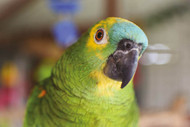
Meet Blu Lu: A New Blue-throated Macaw Addition
- Blu Lu is a Blue-throated Macaw, one of the world's rarest Parrot species.
- She was hatched at the Bird Endowment, an organisation dedicated to Blue-throated Macaw conservation.
- Her story highlights the important link between parrot conservation and responsible captive breeding.
- Blu Lu was selected to become an ambassador for her species through training and public education.
Supporting Blue-throated Macaw Conservation
- Blue-throated Macaws have a very small wild population.
- Conservation efforts include providing nest boxes and supporting field researchers.
- Researchers monitor breeding success and help protect wild birds and their habitat.
- Maintaining awareness of endangered species is essential for their long-term survival.
- Education and conservation programmes play a vital role in protecting these remarkable Parrots.
The Importance of Conservation Breeding Programmes
- The Bird Endowment maintains a genetically diverse captive population of Blue-throated Macaws.
- Birds are housed in large flight aviaries and encouraged to behave naturally.
- The aim is to preserve healthy bloodlines for future generations.
- Conservation breeding programmes provide an important safety net for endangered species.
- These birds could help support future recovery efforts if wild populations continue to decline.
Why Blu Lu Was Hand-Reared
- Blu Lu was neglected by her parents and required human intervention.
- Hand-rearing ensured she received the care and nutrition needed to thrive.
- Because she became accustomed to human interaction, she was less suitable for a conservation breeding flock.
- Instead, she was given the opportunity to become a representative for her species.
- Early experiences often shape a young parrot's confidence and behaviour around people.
A Positive Start Through Training
- Blu Lu began learning important behaviours from an early age.
- Training was based entirely on positive reinforcement techniques.
- She learned to:
- Step up voluntarily.
- Step onto a scale.
- Participate in recall training.
- Engage confidently with people.
- Positive reinforcement encourages cooperation rather than force.
- Early training helps create confident, well-adjusted companion parrots.
The Benefits of Early Learning
- Young Parrots learn quickly and are highly receptive to new experiences.
- Early training helps develop useful lifelong skills.
- Positive experiences during this stage can build confidence and resilience.
- Introducing routine husbandry behaviours early can reduce future stress.
- Good habits established when young are often easier to maintain as the bird matures.
The Role of Positive Reinforcement
- Reward-based training strengthens desired behaviours.
- Training sessions help build trust between Parrot and owner.
- Birds learn more effectively when they can choose to participate.
- Rewards can include favourite foods, praise, attention or enrichment activities.
- Positive reinforcement creates a strong foundation for future learning.
Settling Into a New Home
- Moving home can be a significant adjustment for any Parrot.
- Blu Lu was given time to explore her new surroundings at her own pace.
- Treats were used to create positive associations with her travel cage and new environment.
- Allowing a bird time to observe before interacting can reduce stress.
- Patience during the settling-in period helps build confidence.
Signs of a Well-Prepared Young Parrot
- Willingly steps up.
- Accepts handling calmly.
- Participates in basic training behaviours.
- Shows curiosity about new environments.
- Recovers quickly from minor changes and challenges.
- Responds positively to rewards and interaction.
Tips for Bringing Home a New Parrot
- Give your parrot time to settle before expecting too much interaction.
- Establish a consistent daily routine.
- Focus on building trust before teaching advanced behaviours.
- Use positive reinforcement from day one.
- Introduce new experiences gradually.
- Encourage independence alongside social interaction.
- Monitor eating, sleeping and activity levels during the adjustment period.
- Keep early training sessions short and enjoyable.
Common Mistakes to Avoid
- Rushing the bonding process.
- Forcing physical interaction.
- Overwhelming the bird with too many new experiences at once.
- Using punishment or coercive training methods.
- Expecting immediate results.
- Ignoring body language that signals stress or discomfort.
Advice for Successful Training
- Build a relationship before focusing on tricks.
- Reward behaviours you want to see repeated.
- Keep training sessions fun and engaging.
- End sessions on a positive note.
- Be consistent with cues and rewards.
- Celebrate small victories and gradual progress.
- Remember that trust and confidence are the foundations of successful training.
Key Takeaway
- Blu Lu's story demonstrates how proper care, early socialisation and positive reinforcement can set a young Parrot up for success.
- Conservation, education and training can work hand in hand to support endangered species.
- Whether you're bringing home a baby Parrot or adopting an older bird, patience, trust and positive experiences are the keys to building a lasting partnership.
Barbara Heidenreich has advice on training a new Parrot.
I have a new addition to my flock of Parrots. Meet Blu Lu, a Blue-throated Macaw. Blu Lu was hatched at the Bird Endowment. The Bird Endowment is dedicated to Blue Throated Macaw conservation. They support conservation efforts in the field by providing nest boxes and sponsoring the work of field researchers who monitor the nest boxes and the tiny wild population that exists.

Blue-throated Macaws
Because there are so few left in the wild, another way the Bird Endowment is helping preserve Blue Throated Macaws is to maintain a genetically diverse flock of them in captivity. These birds live in large flight cages and are encouraged to behave like Parrots, not pets. If for any reason the wild population should go extinct these birds may be the last hope for potentially replenishing the wild with Blue-throated Macaws.
Breeding is encouraged so that this flock is robust should that day come. However sometimes Parrot parents don?t do their jobs. And unfortunately Blu Lu was a bit neglected by her parents. This meant hand raising her. Because of this her inclination to be around humans would make her a less than ideal candidate for the Bird Endowment flock.
I was approached to see if might like to take Blu Lu under my wing and train her to be a spokes bird for her species. I said ?yes? under one condition, Wendy Craig of Wendy?s Parrots would have to finish her hand raising.
Positive Reinforcement
That is because besides being a caring, responsible and knowledgeable breeder; Wendy knows how to train with positive reinforcement. This meant from the time she arrived at Wendy?s she was already learning how to step up, step onto scale, recall, etc voluntarily via positive reinforcement.
During that phase of development Parrots are sponges and it means there is an important opportunity to shape behaviours that are important for a Parrot?s life in a home. Check out my article called ?A Good Start to a Good Bird? in the Fall 2010 issue of Good Bird Magazine for more about this.
Blu Lu?s name came from famous blues singer Blu Lu Barker. The Bird Endowment has a tradition of naming the birds after famous blues artists. I felt it fitting to follow suit. As a music fan myself, many of the other animals in my home are named after musicians (Waylon, Delbert, Joe Cockertiel)
Wendy
Blu Lu has just arrived. In the blogs to follow I will update everyone on her training and progress. So far she is just adjusting to her new environment and getting to know new people. She is already great at stepping up and stepping onto a scale thanks to Wendy.
Here is a picture of the night she arrived. (Please excuse all the boxes in the background. I was temporarily storing some items at my house). It was a long day of driving and we arrived after dark. I gave Blu Lu some time to look around and get some treats from inside the travel cage before she came out. As you will see she adjusted rather quickly thanks to her previous training at Wendy?s. More videos and blogs on her progress to come.
Do you have any advice on training a new Parrot?
Contact details
Barbara Heidenreich
Copyright Good Bird Inc 2010
This was originally published on Barbara?s blog in 2010.
For more on training and behaviour please click here.
Sign up to get early access to exclusive deals, special offers, new arrivals, blogs and more...