
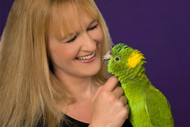
Tips to Get Started Training Your Parrot by Barbara Heidenreich
Posted by Parrot training, tips for training your Parrot, get started training your Parrot, advice on how to train a Parrot on 31/3/2025

Choose the Right Training Location
- Pick a place where your parrot already feels safe and comfortable.
- Suitable locations may include their cage, play stand, favourite perch or a spot they regularly visit.
- Make sure you can easily reach your bird without stretching or sitting in an awkward position.
- Choose a calm, quiet environment with minimal distractions.
- Turn off noisy televisions or music and limit interruptions from people or other pets.
- A relaxed environment helps your Parrot focus on learning.
Prepare High-Value Rewards
- Have plenty of your Parrot's favourite treats ready before training begins.
- Cut treats into small pieces so your bird can enjoy several rewards during a session.
- Popular rewards include almonds, walnuts, sunflower seeds, peanuts or other favourite foods.
- Keep extra treats nearby in case the session lasts longer than expected.
- Reward your Parrot immediately after the desired behaviour to reinforce learning.
Use Toys as Motivators
- Some Parrots are motivated by toys as much as food.
- Gather a selection of safe, engaging toys before training.
- Rotate toys regularly to maintain interest.
- Use a favourite toy as a special reward for successful training sessions.
Start with Realistic Expectations
- Keep initial goals simple and achievable.
- Focus on one behaviour at a time.
- Remember that every Parrot learns at a different pace.
- Celebrate small successes and gradual improvements.
- Avoid expecting perfection during the first few sessions.
Keep Training Sessions Short
- Short sessions are often more effective than long ones.
- Aim for around 5-10 minutes, especially with beginners.
- End the session while your Parrot is still interested and engaged.
- Several short sessions throughout the day can produce better results than one lengthy session.
Watch Your Parrot's Body Language
- Look for signs that your bird is relaxed and ready to learn.
- Positive signs include curiosity, engagement and willingness to take treats.
- If your Parrot appears frightened, distracted or frustrated, pause the session.
- Training should always be a positive experience.
Be Consistent
- Use the same cues and rewards when teaching a new behaviour.
- Consistency helps your Parrot understand what is expected.
- Ensure everyone in the household follows the same training approach.
- Clear communication helps prevent confusion.
Focus on Positive Reinforcement
- Reward behaviours you would like to see repeated.
- Ignore minor mistakes and redirect your bird where appropriate.
- Never punish your parrot during training.
- Positive reinforcement builds trust and strengthens your relationship.
End on a Positive Note
- Finish each session with an easy behaviour your Parrot knows well.
- Offer praise, a favourite treat or playtime at the end.
- This helps your bird look forward to future training sessions.
- Positive endings increase enthusiasm for learning.
Extra Tips for Training Success
- Train when your Parrot is alert and interested, not tired or distracted.
- Have all treats, toys and training tools prepared before you begin.
- Be patient and allow your bird time to think and respond.
- Make training fun for both you and your Parrot.
- Remember that building trust is just as important as teaching new behaviours.
- Regular training sessions can provide valuable mental enrichment and help strengthen the bond between you and your bird.
Key Takeaway
- Successful training starts with preparation.
- Choose a comfortable location, use motivating rewards and keep sessions positive.
- Work at your Parrot's pace and focus on building confidence and trust.
- With patience, consistency and positive reinforcement, training can become an enjoyable part of your daily routine.
Are you looking forward to training your Parrot? It can be a lot of fun for you and your bird as long as you are prepared.
Before you have your first training session here are a few tips to help make sure you have a great session.
1. Pick a location to train. Training is fun if both you and your Parrot are relaxed and comfortable. Try to find a place that your Parrot enjoys being. This may be in or near his enclosure or another place he frequently visits such as the couch or a play stand.
Location
You also want to make sure the location you choose is comfortable for you. You don?t want your Parrot perched someplace that is difficult for you to reach. Sometimes trainers end up in some funny positions while they wait patiently for the bird to respond. If this position is uncomfortable you won?t be able to be wait for very long.
Also try to pick an area that is calm and quiet. Too much activity can cause your Parrot to focus on everything else except you and the training session
2. Have a stash of favourite treats and toys on hand. When we train a new behaviour or trick it is important that something good happens when your bird does what you request. Usually favourite foods are the perfect thing to use to reward your Parrot. Try to have tiny pieces of food prepared before you start training. This means you may have to spend some time breaking up pieces of peanut, almond or sunflower seeds before your training session.

Treats
It is nice to have lots of extra treats on hand in case your session goes really well. You don?t want to run out of goodies! If your Parrot likes toys, you can gather a stash of small toys for training.
Have lots of different toys to choose from so your bird will stay interested.
Buy toys here and treats here.
3. Have a plan. Before you bring your Parrot to your training location think about what you would like to teach your bird to do. You will also want to think about the steps you are going to take to train your Parrot to do the behaviour.
Thinking about the steps will help you decide what props and set up will be needed to train the trick. For example if you want to train your Parrot to turn around in a circle, you may need to have a target stick and a perch that allows you to easily move your hand underneath the bird.
4. Make sure your bird is ready for a training session. Two things are very important for training. Your bird needs to be relaxed and comfortable and he also needs to be interested in the treats or toys you have to offer. Try to choose a time of day when your Parrot seems to be eager to interact with you and is also happy to have some treats or attention. For many Parrots this can be in the morning after they wake up and before they get breakfast.
Steps
5. Have fun! When you follow steps one through four you can expect to have a great time training your Parrot. If you or your Parrot is not in the mood for a training session, it is OK to stop the session and try again later.
This help make sure both of you are enjoying training. It is a very exciting moment when your Parrot understands what you are trying to teach him do. This is what makes training so fun. Try these tips with your Parrot at home and you will find your training sessions will be very successful
Barbara Heidenreich
For more information on how to train your Parrot visit Good Bird Inc
Barbara?s Force Free Animal Training www.BarbarasFFAT.com
Copyright 2014 First appears in Fledglings Magazine by The Parrot Society of Australia
There is more on training and behaviour ?here.
Sign up to get early access to exclusive deals, special offers, new arrivals, blogs and more...