
Parrots' Eating Habits: Wild Behaviour and Captive Care
Posted by Parrot food, Parrots eating on 30/7/2025
Parrots, with their bright plumage, intelligence and expressive personalities, are some of the most fascinating birds in the world. Equally intriguing is their eating behaviour, which reflects their adaptability, social complexity and cognitive sophistication.
Understanding how Parrots eat in the wild, what they need in captivity and how to keep them mentally and physically stimulated at mealtimes is crucial for their overall well-being.
Parrots in the Wild: Social Eaters and Skilled Foragers
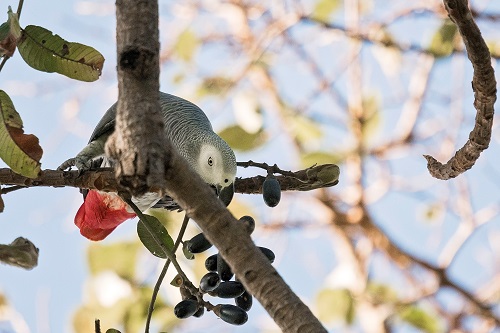
In their natural habitats?ranging from rainforests to savannahs and even urban environments?Parrots are opportunistic and highly adaptive foragers. Wild Parrots don?t just eat; they work for their food. Their diets include a diverse mix of seeds, nuts, fruits, flowers, bark, insects and even clay (to neutralize toxins found in some of the foods they consume).
Social Foraging and Flock Dynamics
Parrots are highly social creatures and foraging is often a communal activity. Flocks of Parrots will travel and feed together, with individuals keeping watch for predators while others feed.
This social aspect of feeding is not just about safety?it's also a form of communication and bonding. These communal dinners tend to happen early morning and evening.
Within a flock, Parrots often mimic each other?s eating behaviours. If one Parrot finds a new food source, others are likely to follow suit. This social learning helps flocks identify safe and nutritious foods in ever-changing environments.
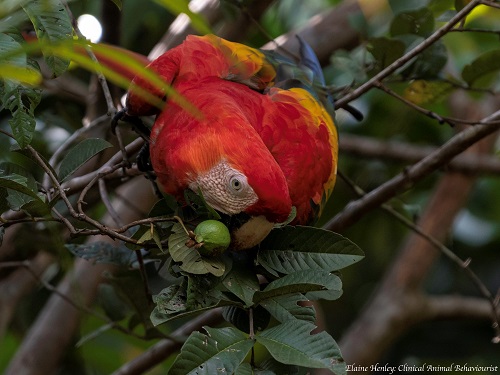
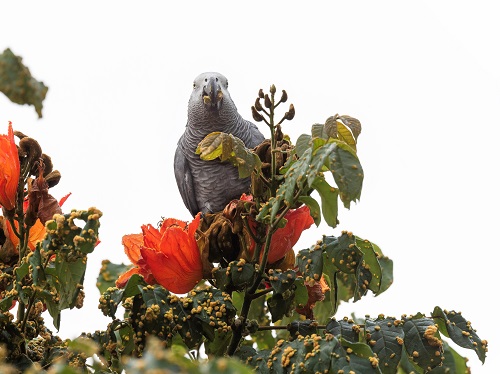
Certain species, like the Australian Budgerigar or the South American Macaws or Grey Parrot, engage in large-scale flock feeding events. These "dining sessions" are noisy, lively gatherings full of chatter, squabbles and cooperation.
Researchers have historically witnessed flocks of over 1,000 Parrots. Nowadays, it is unlikely to see this number, but large gatherings can still be witnessed.
What Parrots Eat in the Wild
The specific diet of a wild Parrot depends on its species and environment. Some key components include:
- Seeds and Nuts: Many Parrots, such as African Greys and Macaws, crack open hard shells with their powerful beaks to access nutrient-dense kernels.
- Fruits and Berries: A wide variety of wild fruits are consumed for hydration, energy, and vitamins.
- Vegetation: Leaves, buds, and flowers add fibre and phytonutrients.
- Insects and Larvae: While not a staple for all species, many Parrots will eat insects, especially during breeding season for extra protein.
- Clay: Some Parrots in South America are known to visit clay licks to consume soil, which may help detoxify chemicals in their diet or provide minerals.
This wide variety of foods ensures Parrots get a balanced diet in the wild, with plenty of stimulation and challenge.
Feeding Parrots in Captivity: What They Should Eat
When Parrots are kept as pets, their dietary needs become the responsibility of their human caregivers. Unfortunately, many captive Parrots suffer from malnutrition due to improper diets?too many seeds and not enough variety.
Ideal Diet Composition.
A healthy captive Parrot diet should include:
- Pellets (30?50%): Specially formulated Parrot pellets provide balanced nutrition and are a good base diet.
- Fresh Vegetables (30?40%): Dark leafy greens (like kale, spinach, chard), carrots, bell peppers, broccoli and squash are excellent choices.
- Fresh Fruits (10?20%): Apples, bananas, berries, mangoes and papaya offer variety and sweetness but should be limited due to sugar content.
- Whole Grains and Legumes: Cooked brown rice, quinoa, lentils and chickpeas offer protein and fiber.
- Nuts and Seeds (5?10%): These are high in fat and should be treated as special rewards or training treats.
- Occasional Protein: Cooked egg, small amounts of cheese or insects (like mealworms) can be offered occasionally.
Foods to Avoid.
Certain foods are toxic or dangerous for Parrots, including:
- Avocado
- Chocolate
- Caffeine
- Alcohol
- Onion and garlic
- High-fat, salty or processed human foods
Providing clean, fresh water at all times is also essential.
How Often Should Parrots Eat?
Unlike dogs or cats, Parrots tend to graze throughout the day. Their fast metabolism and active lifestyle require frequent feeding opportunities.
- Daily Feeding Schedule: Most Parrots should be offered food twice a day?once in the morning and again in the evening. However, access to foraging toys or food items throughout the day is beneficial.
- Snacks and Foraging: Offer snacks or enrichment foods during the day to mimic natural foraging patterns.
- Fasting Overnight: It?s healthy for Parrots to go without food overnight, mimicking natural behaviour and allowing digestion. However, I always leave food in their cages overnight- mainly because they wake up earlier than I do and often want a snack.
Each Parrot species may vary slightly in metabolism, so it?s important to adjust food quantity and frequency based on size, age and activity level.
Making Mealtimes Interesting: Mental Stimulation and Foraging
Parrots are intelligent and inquisitive. Simply placing food in a bowl fails to meet their mental and physical needs. In the wild, much of their time is spent searching for food. This effort isn?t just necessary?it?s enriching.
To mimic this in captivity, foraging toys and interactive feeding are essential.
Foraging Toy Ideas.
- Paper-Wrapped Treats: Wrap small food items in paper or tissue and place them in boxes or tubes.
- Shredding Toys with Food: Hide treats inside destructible toys made of bird-safe materials.
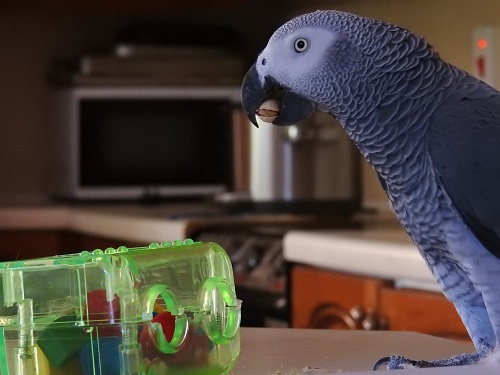
- Puzzle Feeders: Commercially available or homemade puzzles require the Parrot to figure out how to release the food.
- Hanging Fruit Kabobs: Skewer fruits and vegetables on stainless-steel rods and hang them in the cage.
- Treasure Hunt: Scatter food around the cage or play area to encourage exploration.
- Foraging Boxes: Fill a shallow box with clean pebbles, shredded paper, or toy parts and hide bits of food inside.
Rotate toys and change foraging strategies regularly to keep your Parrot engaged.
The Role of Flock Dinners and Shared Meals.
In the wild, Parrots eat as a group, and this dynamic can be recreated in captivity through ?flock dinners? or shared meals with their human families.
Benefits of Flock Dinners.
- Social Bonding: Eating together strengthens the bond between Parrot and caregiver.
- Modelling Behaviour: Parrots often try new foods when they see their human eating them.
- Reduced Anxiety: Sharing food can reduce stress and build trust in nervous or rehomed birds.
How to Do It Safely.
- Eat bird-safe foods yourself and allow your Parrot to have their own portion.
- Avoid feeding directly from your plate to prevent contamination or ingestion of harmful foods.
- Make it a ritual?Parrots enjoy routine and will look forward to ?dinner time.?
- Give your Parrot a plate like yours to eat from.
Training and Mealtime: Using Food as a Tool.
Food is one of the most effective reinforcements in training Parrots. When used wisely, it can strengthen trust and encourage desired behaviours.
- Target Training: Rewarding a Parrot with a small treat for touching a target stick.
- Step-Up Training: Reinforcing with sunflower seeds or nuts when the bird steps onto your hand.
- Recall Training: Calling the bird and offering a favourite food reward when it flies to you.
Using high-value treats (like almonds or safflower seeds) exclusively for training helps maintain motivation.
Feeding Challenges and Solutions.
Picky Eaters.
Many Parrots are naturally neophobic (afraid of new foods). To combat this:
- Offer new foods repeatedly in different forms (chopped, grated, cooked).
- Model eating behaviour yourself.
- Mix new items with favourite foods.
Overeating or Selective Eating.
Some Parrots will pick only their favourite foods (often high-fat seeds or nuts). To manage this:
- Remove seed mixes and replace with pellets.
- Offer measured amounts of food, not free feed.
- Use food scales to monitor intake.
Malnutrition.
Improper diets can lead to obesity, vitamin deficiencies (especially Vitamin A), and liver disease. Regular vet checkups, including bloodwork, can help detect and manage nutritional imbalances.
Seasonal and Life Stage Changes.
Just like wild Parrots, captive Parrots may eat more during moulting, breeding or colder seasons. It's important to adjust food quantity and types accordingly.
- Breeding Season: More protein may be needed.
- Moulting: Additional vitamins and minerals support feather growth.
- Aging Parrots: May require softer foods or more easily digestible items.
Consulting an avian veterinarian for life stage-specific guidance is always wise.
Conclusion
Feeding Parrots is about much more than filling a bowl. It involves understanding their natural behaviour, offering a nutritionally complete diet, and enriching their environment to simulate the stimulating, complex world they experience in the wild.
By incorporating foraging toys, flock dinners, diverse foods and smart feeding routines, caregivers can ensure that their Parrots not only survive?but thrive?physically, mentally, and emotionally. In doing so, we honour the wild instincts of these magnificent birds and provide them with a life as close as possible to what nature intended.
?Elaine Henley P.G. Dip CABC
Full Member Association of Pet Behaviour Counsellors (APBC)
Animal Behaviour Training Council (ABTC) Registered Clinical Animal Behaviourist
Phone: 01294 833764
Website: www.dogbehaviour.org.uk
Facebook:www.facebook.com/animalbehaviourclinic