
Is My Parrot Overweight?
Posted by Parrot weight, Parrot obesity, overweight Parrot, Is my Parrot skinny, Is my Parrot too thin, Is my Parrot fat, Is my Parrot obese, Is my Parrot underweight, Is my Parrot an ideal weight, Is my pet bird skinny, Is my pet bird too thin, Is my pet bird fat on 28/1/2026
?In this article you'll find a useful guide on how to visually assess how heathy your Parrot is.

Your Parrot?s weight and body condition are key indicators of their overall health, and regular checks can help you spot issues early. Using the keel test is a quick way to assess whether your bird is underweight, healthy, or overweight, especially when their feathers are wet and muscles are easier to feel.
Alongside this, routinely weighing your Parrot and knowing their species? healthy weight range provides a clearer picture of their wellbeing. If your Parrot appears thin or overweight, diet adjustments, increased exercise and careful monitoring can help, but sudden or unexplained changes should always be discussed with an avian vet to rule out underlying illness.
The Keel test is a good initial way to gauge the health of your Parrot. We recommend checking while your feathered friend is wet, after a bath or shower as it is much easier to see the breastbone and muscles.
Gently feel the breastbone (keel) running down the centre of the chest. How does your Parrot compare to the chart below.?
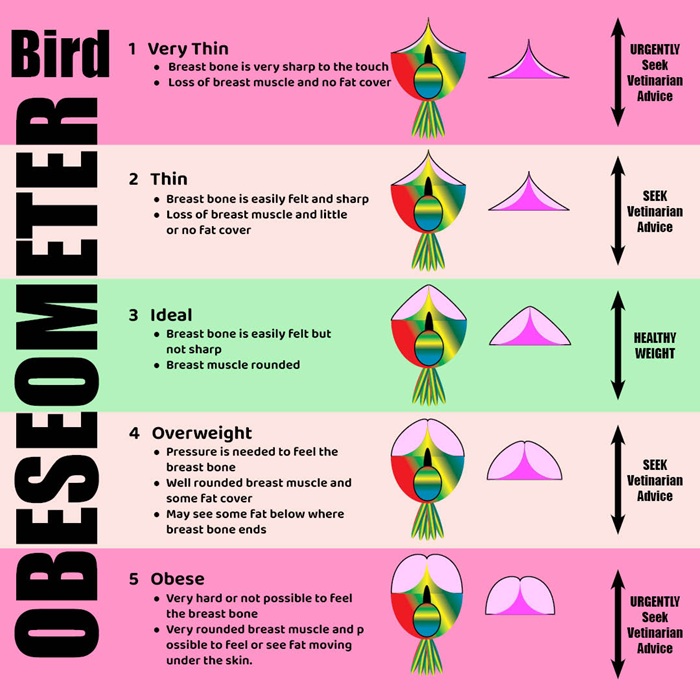
The Keel test is a useful tool. However, it is recommended to research the healthy weight range for your species of Parrot, and the to regularly record your beaky buddie's weight.
Tips for combating Overweight or Obese Parrots:
- Encourage exercise through play with toys that promote movement.
- Encourage them to fly more, this can be done indoors with a recall routine.
- Using a Parrot harness so they can fly in a larger space outdoors.
- Review your Parrot's diet, reducing high fat seeds and nuts and introducing new healthier foods.
Any unexpected changes could be an early sign their diet or level of activity isn't quite right. Plus, it can also be an indication of an underlying illness.
If you're Parrot is comparing to the Thin or Very Thin sections we recommend consulting your avian veterinarian to rule out or help treat any illness.
For instances where no illness is found our top tips would be...
- Short term high-calorie boost - increase healthy fats and nutrients.
- Short term protein boost - try feeding cooked unseasoned scrambled or hard boiled eggs.
- Introduce or increase feeding of sprouting seeds.
- Transition to a better diet slowly.
- Decrease competition - more if you have multiple birds.
- Continue to monitor your bird's weight closely.
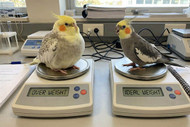
Scales like these are accurate to within one gram.
Don?t just take our word for it. Avian vet Tariq Abou-Zahr says:
"Birds are designed to fly and sometimes, without doing the exercise that they naturally would, they can gain weight easily in captivity. This can lead to various health issues including heart disease, joint disease, bumblefoot, circulatory disturbances and exercise intolerance
It can also exacerbate reproductive disease and contribute to liver disease. Feeding a nutritionally complete diet without excess energy is important for all pet Parrots. Giving them access to an aviary to allow flight can really improve their physical and mental health too."
Speaking to an avian vet like Tariq is always recommended.
What tips do you have for checking on your Parrot?s weight?
Sign up to get early access to exclusive deals, special offers, new arrivals, blogs and more...