

Safe And Unsafe Foods For Parrots
Posted by Parrot food, Parrot pellets, Parrot Seed on 21/3/2025
Want to expand your Parrot's menu? Explore the fruits, nuts, spices and treats that are safe to feed, as well as the foods that could be harmful to your bird's health.

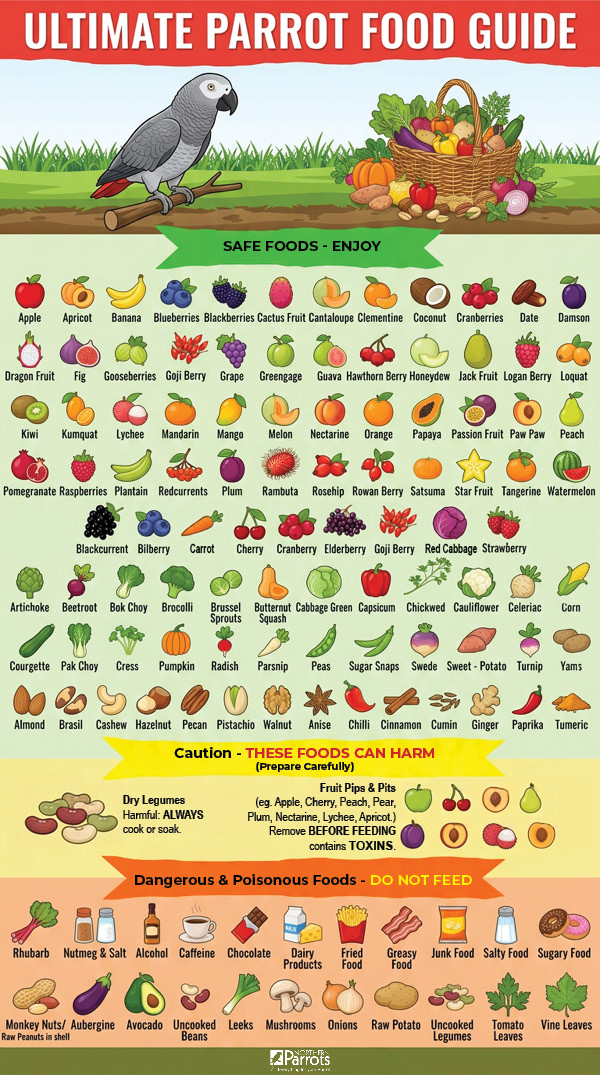
We all love treating our Parrots. Whether they're giving us their cutest look while we're eating lunch or eagerly investigating what's on our plate, it's tempting to share a little snack with them. But before you do, it's important to know which foods are safe and which should be kept well away from your feathered friend.
The good news is that many everyday fruits, vegetables, herbs and nuts can be enjoyed by parrots as part of a balanced diet. However, there are also some foods that can be harmful and even dangerous. Safe And Unsafe Foods For Parrots provides a handy visual guide to help owners make the right choices.
Why Does Variety Matter?
Just like us, Parrots benefit from a varied diet. Offering different foods not only provides a range of nutrients but also helps keep mealtimes interesting.
A healthy diet should always start with a quality complete food, but adding fresh ingredients can provide extra enrichment and encourage natural foraging behaviours. Plus, trying new foods is a great way to stimulate your bird mentally.
Fruits Your Parrot Will Love!
Many Parrots are big fans of fruit, and it's easy to see why. The bright colours, sweet flavours and juicy textures make fruit a popular choice.
Some safe favourites include:
- Apples (with the seeds removed)
- Pears
- Grapes
- Bananas
- Mango
- Papaya
- Blueberries
- Strawberries
Fruit is packed with vitamins and antioxidants, but because it contains natural sugars, it's best served as part of a varied diet rather than the main event.
Veggies Deserve a Place on Every Plate
If there's one food group that deserves a gold star, it's vegetables.
Colourful vegetables are full of nutrients that support your bird's health and wellbeing. Try offering:
- Broccoli
- Peppers
- Carrots
- Green beans
- Peas
- Sweetcorn
- Courgette
- Butternut squash
If your Parrot turns their beak up at vegetables initially, don't worry. Some birds need more time than others to decide a new food is worth trying.
Herbs, Spices and Other Healthy Extras
Want to add even more variety to mealtimes? Herbs are a fantastic option.
Many Parrots enjoy exploring fresh herbs such as basil, parsley, coriander and mint. You can even add bird-safe spices like cinnamon to enrich feeding time and introduce new flavours.
Sometimes the simplest additions can create the most excitement.
Nuts: A Tasty Treat
If your Parrot had to choose a favourite reward, there's a good chance nuts would be near the top of the list.
Almonds, walnuts, pistachios, pecans and hazelnuts are all popular options. They're ideal for training sessions or hiding inside foraging toys to encourage natural behaviours.
??Just remember that nuts are high in fat, so moderation is key!
Foods That Should Never Be Shared!
While plenty of foods are perfectly safe, there are some that should stay firmly off your Parrot's menu:
- Avocado - avocado contains persin, a compound that can be toxic to birds. If your Parrot has eaten avocado, remove any remaining pieces immediately and contact your vet for advice. Watch for signs such as breathing difficulties, lethargy or weakness.
- Chocolate - Chocolate contains theobromine and caffeine, which can affect a Parrot's nervous system and heart. If chocolate has been consumed, note the type of chocolate and approximately how much was eaten before contacting your veterinarian. Dark chocolate and baking chocolate are particularly dangerous.
- Caffeine - tea, coffee, energy drinks and other caffeinated products can have a serious effect on birds. If your parrot has consumed caffeine, remove access to the source and seek veterinary advice immediately. Signs of toxicity may include restlessness, hyperactivity or an increased heart rate.
- Alcohol - alcohol is toxic to parrots and should be treated as an emergency. Even small amounts can be harmful. Contact a vet immediately if your bird has consumed alcohol.
- Onion and Garlic - If your Parrot has eaten onion or garlic, monitor them closely and contact your veterinarian, especially if a significant amount has been consumed. These foods can cause health complications and should not form part of a Parrot's diet.
- Fruit Pits and Seeds - some fruit stones and seeds contain compounds that can be harmful when consumed. If your Parrot has eaten a fruit pit or large quantity of seeds, remove any remaining fragments and seek veterinary guidance.
When to Contact a Vet
It's always worth seeking professional advice if your Parrot eats a food known to be unsafe. Contact a vet immediately if your bird shows any of the following signs:
- Vomiting or regurgitation
- Tremors or shaking
- Difficulty breathing
- Seizures
- Weakness or lethargy
- Loss of balance
- Unusual behaviour
When speaking to your vet, try to provide details about what your Parrot ate, how much was consumed and when the incident occurred.
??Prevention Is Better Than Cure
The easiest way to keep your Parrot safe is to ensure harmful foods are never left unattended and are kept well out of reach.
Making sure everyone in the household knows which foods are unsafe can help prevent accidents and keep your feathered friend happy and healthy. ??
Helping a Fussy Parrot Try New Foods
Got a picky eater at home?
??Don't give up after the first attempt. Parrots often need to see a food several times before they're willing to taste it.
You could try:
- Chopping foods into different shapes and sizes
- Hanging vegetables in the cage
- Using foraging toys
- Mixing new foods with familiar favourites
- Eating the food yourself first to spark curiosity
??Patience usually pays off
The Bottom Line
Knowing what's safe and what's unsafe is one of the easiest ways to support your Parrot's long-term health. By offering a variety of bird-safe fruits, vegetables, herbs and nuts while avoiding potentially harmful foods, you can create nutritious and enriching mealtimes your feathered friend will love.
For a quick at-a-glance guide, be sure to check out our Safe And Unsafe Foods For Parrots infographic and keep it handy whenever you're preparing your bird's next tasty treat.
The Bottom Line
Knowing what's safe and what's unsafe is one of the easiest ways to support your Parrot's long-term health. By offering a variety of bird-safe fruits, vegetables, herbs and nuts while avoiding potentially harmful foods, you can create nutritious and enriching mealtimes your feathered friend will love.
Sign up to get early access to exclusive deals, special offers, new arrivals, blogs and more...